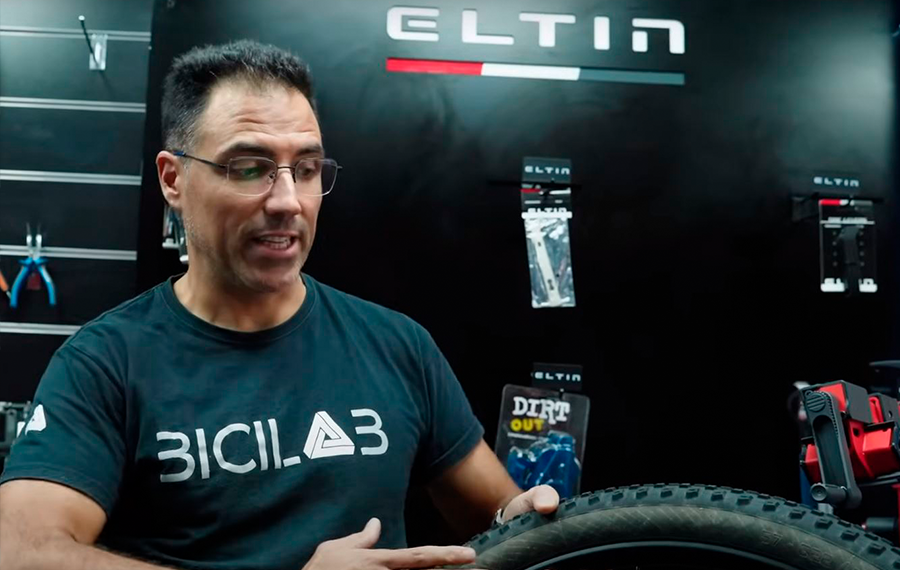
Do you use tubeless tires on your bike? Are you thinking about switching to them? Do you have questions about their use and installation? Don’t worry, because in this second part of the BiciLAB mechanics course, we’re going to answer all of these questions.

The second episode of the BiciLAB mechanics course with Eltin Cycling is here. If you watched the first video, it was surely very helpful, and we hope you’ve already applied some of the tips. If you haven’t seen it yet, don’t worry, here is the link so you can check out the 7 basic adjustments for your bike that BiciLAB introduced in the first episode.

This time, it’s time to talk about “tubeless”, a concept many people are familiar with or already use on their bikes, but which still raises questions and differing opinions, especially regarding its use and maintenance. Here we find cyclists who prefer using inner tubes, those who have tried tubeless and made it their main ally against punctures, or those who, without taking a clear stance, tend to alternate between both and take advantage of each one’s benefits depending on the discipline or situation.

sistema tubeless bici

Tubeless emerged as an evolution of the traditional inner tube system for inflating tires. More accurately, rather than an evolution, it meant the elimination of the inner tube itself, which is something quite different. It involves having an airtight and well-sealed wheel, either through a rim tape or a rim already prepared for tubeless, inserting tubeless sealant inside the tire—which is responsible for fully sealing and preventing air leakage in case of a puncture—and fitting the tire to inflate it so it sits perfectly on the rim.

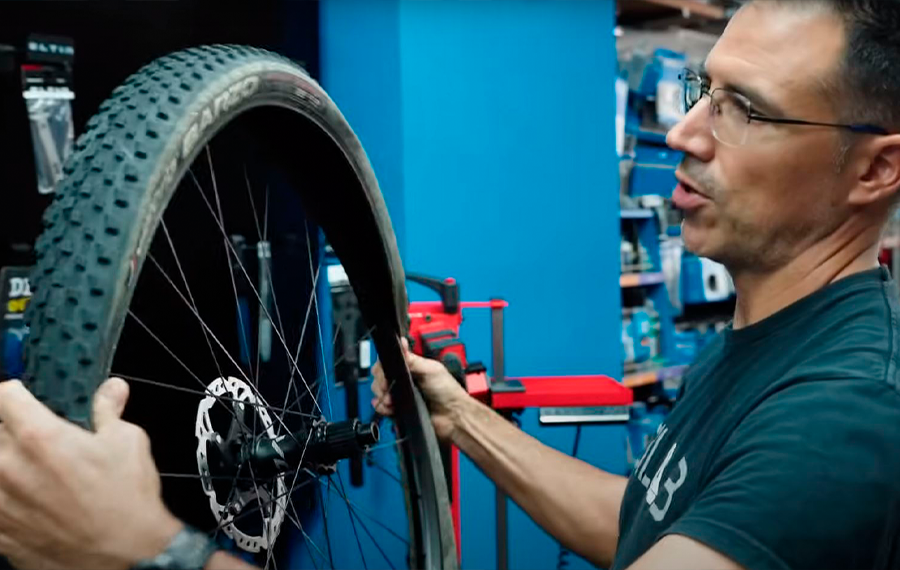
This has been a brief and general explanation of how the tubeless system works, which we already covered on this blog in the article: “Tubeless system: What do I need to convert my wheels to tubeless?”. Although it may seem complicated, don’t worry, because this video from the BiciLAB mechanics course is specifically aimed at explaining step by step how to convert a wheel to tubeless easily, all in a very visual and practical way. Check it out! And as always, to summarize and complement the content, below we’ll go over the key highlights in detail.

What components are involved in converting a bicycle wheel to tubeless?

First of all, you need to know which components are involved and what you need to convert your bicycle wheels to tubeless:

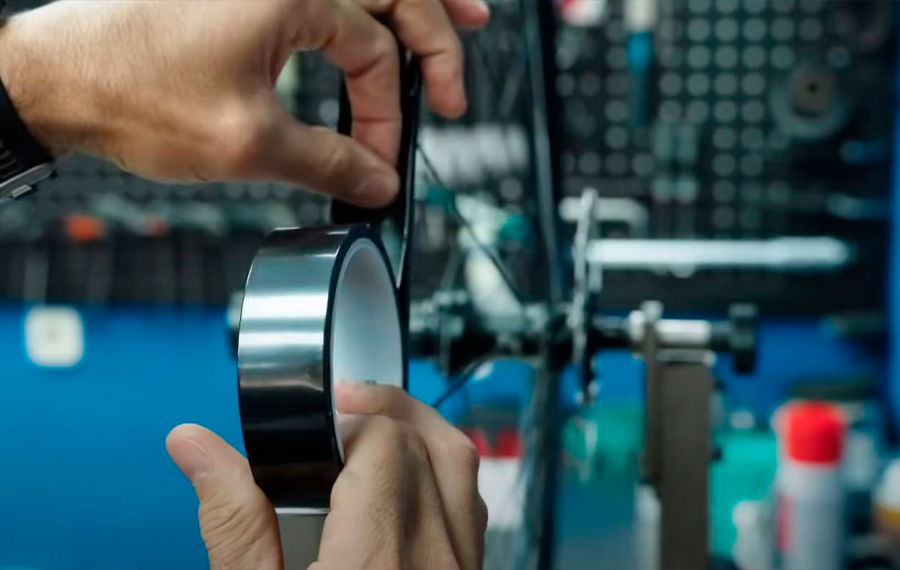
  • Rim tape or tubeless tape: Tubeless tape is used to convert a rim to “tubeless ready”, meaning it’s prepared for tubeless setup. Its function is to seal the rim. It comes in different sizes and widths, so you need to check which one is right for your wheel. A useful recommendation is to choose a tape slightly wider than the rim’s internal width to better cover the sidewalls and maximize coverage.
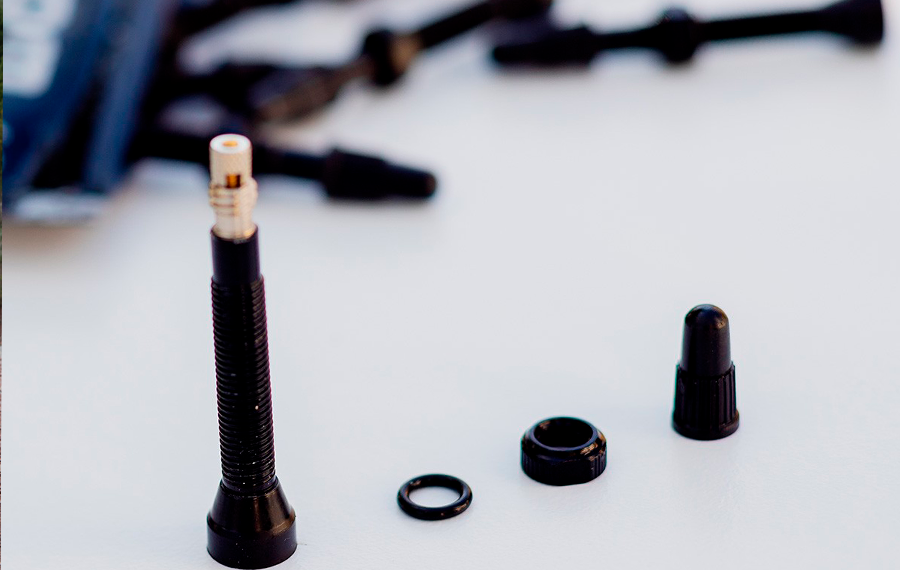
  • Tubeless valves: Since there is no inner tube, you need to install special valves to inflate the tire and perform maintenance. We’ll talk more about this later.
  • Tubeless tires: To set up a tubeless wheel, it’s essential that the tire is “tubeless ready,” meaning it’s designed for tubeless use. Note: this doesn’t mean you can’t use it with a tube—tubeless tires can be used with an inner tube when needed. However, tires that are not “tubeless ready” are only suitable for use with inner tubes.
  • Tubeless sealant: Also known as sealant or anti-puncture fluid, this is responsible for sealing the tire quickly in case of a puncture.
  • An awl or screwdriver to puncture the tubeless tape where you’ll insert the valve.
  • A floor pump or CO2 cartridges with adapter to inflate the tire and seat it properly.
tubelizar rueda

Steps to convert a bicycle wheel to tubeless

Once you have everything you need to start converting a wheel to tubeless, it's time to get to work.

1. Apply the tubeless tape or rim strip.

Start by thoroughly covering the rim bed with the tubeless tape. This process converts a standard bicycle rim into a “tubeless ready” rim, meaning it’s prepared for tubeless setup. Nowadays, there are wheels with rims already designed for tubeless use, in which case applying tubeless tape is not necessary.

cinta tubeless

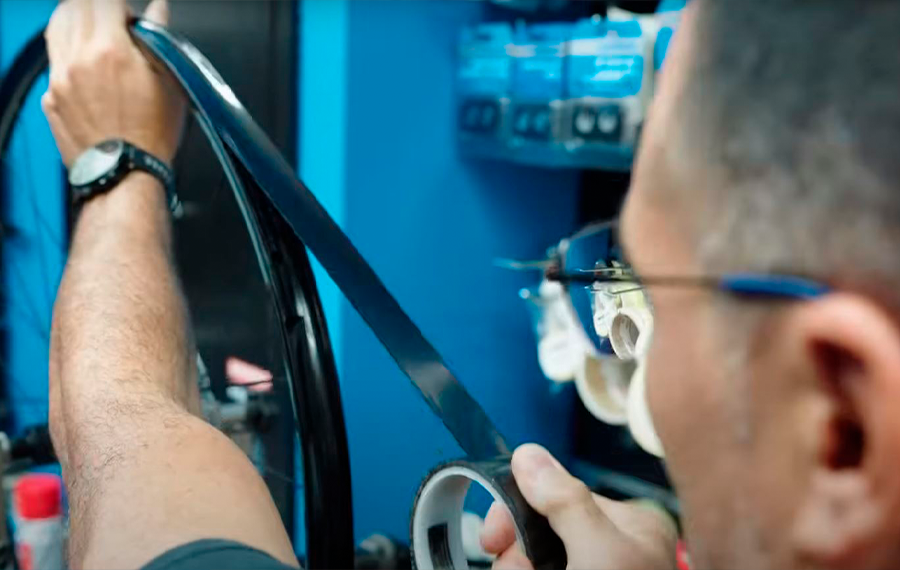
But now let’s start from scratch, assuming you have a standard wheel and need to apply the tape or rim strip in order to go tubeless. The first step would be to take the tubeless tape you’re going to use. Although it depends on the thickness of the tape itself, a good recommendation is to wrap the wheel twice completely to properly seal the rim. You can start on the opposite side of the valve and go over every section of the wheel twice—in other words, wrap it around twice.

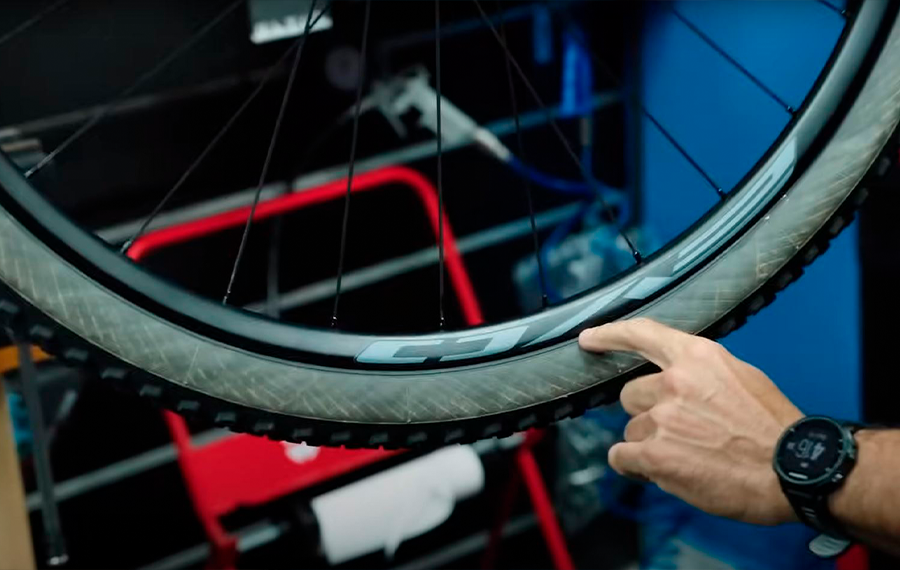
While applying the tubeless tape, it’s very important to keep it under tension so it adheres perfectly. At the same time, make sure it evenly covers the entire width of the rim. Once you’ve done two full wraps, cut the tape with scissors and ensure the start and end points are well sealed to prevent any sealant from leaking in. Once the tape is in place, run your fingers over it with pressure to ensure that the side areas—where the tire bead seats—are well adhered. Don’t worry too much about the center area, as the air pressure will later press the tape firmly into place.

cinta tubeless

2. Install the tubeless valve on your wheel.

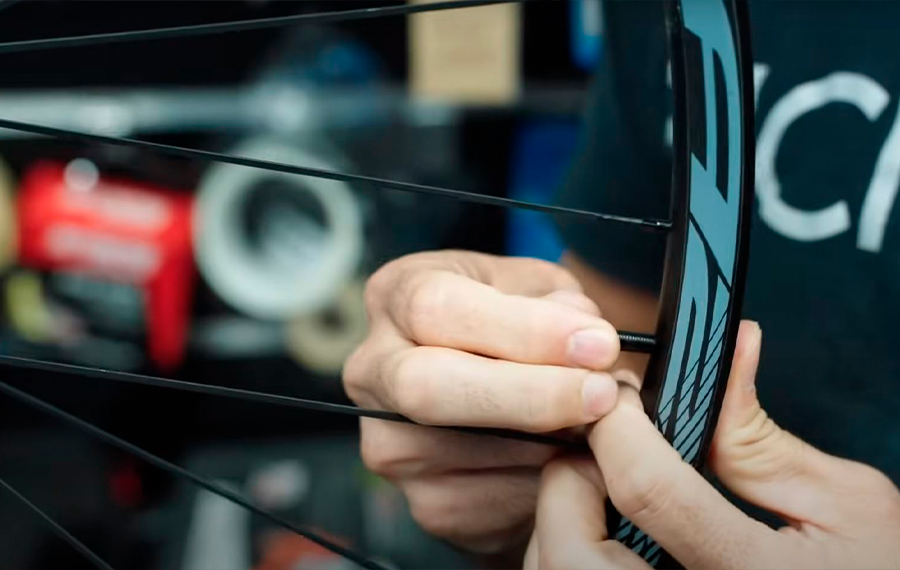
To install the tubeless valve, you first need to locate the hole intended for it and puncture the tubeless tape. It’s best to do this from the inside out, making sure not to tear beyond the space needed for the valve. Don’t worry about making the hole too large—when you insert the valve itself, it will finish creating the necessary opening.

valvula tubeless

You’ll notice that the valve usually comes with a lock ring and a rubber grommet. To insert it through the hole, you need to remove both first and then place them back on the outside once the valve is in. The rubber grommet doesn’t have a major sealing function—it's just a small aid—but the lock ring must be properly tightened by hand to ensure the area is sealed. It’s recommended to do this by hand and not with a tool, because if you ever need to switch to an inner tube during a ride, you might find it difficult to remove the valve if it's too tight.

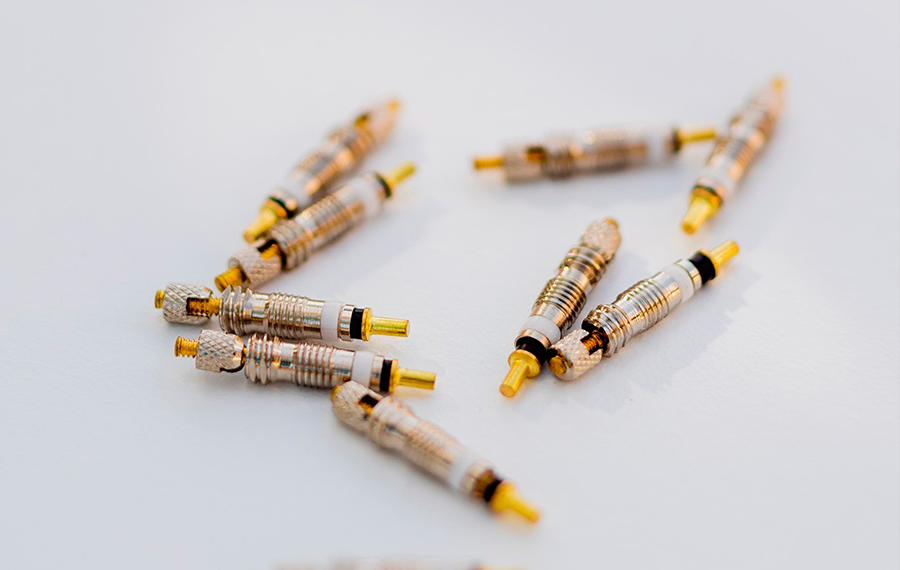
The top part of the valve is the valve core, which contains the mechanism that allows air to enter and exit. In tubeless valves, the core is removable, so you can add sealant through the valve when needed. To make this easier, tubeless valves usually include a small tool to install and remove the core easily.

valvula tubeless

3. Fit the tire and add the tubeless sealant.

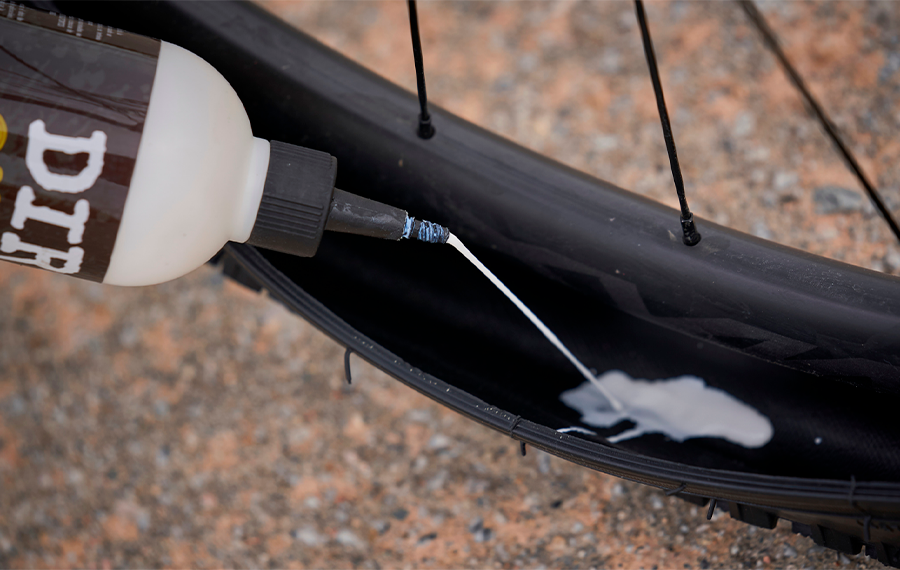
Once the tubeless tape or rim strip and the valve are in place, proceed to fit the tire on one side, leaving the other side open to add the sealant. This fluid, also known as tubeless sealant or anti-puncture fluid, is responsible for sealing the tire as soon as a puncture occurs and preventing the wheel from losing air.

The sealant can be poured directly inside the tire once one side is mounted, or through the valve without the core, as mentioned in the previous step, once the tire is fully installed. The recommended method when setting up a wheel tubeless for the first time is to pour the sealant inside the half-mounted tire, and later, for maintenance and periodic top-ups, to add it through the valve. However, for example, if the tire is difficult to seat, it might be better to mount it first without the mess of the sealant and then pour it through the valve once the tire is seated. You can choose whichever method works best for you.

A very common question is how much tubeless sealant to use per wheel. It depends on the wheel type and size, but generally, for a 29” MTB wheel with a 2.20–2.25 width, the recommended amount is 100–120 ml for a full refill.

Once you’ve added the sealant, finish mounting the tire onto the entire wheel. You can do this with your hands, if possible, or with the help of tire levers. If you find it difficult to mount in certain sections, try unseating the bead and pushing it toward the center of the rim on the opposite side to reduce tension and make it easier to fit the tire into the rim.

cubierta tubeless

4. Seat the tire bead on your bicycle wheel.

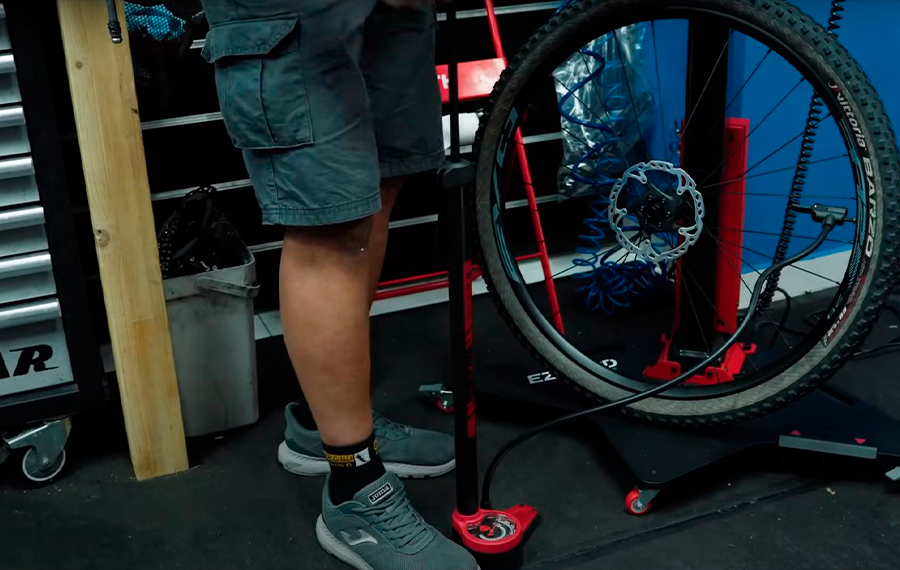
To properly seat the tire bead, you need to inflate it until you hear the popping sounds that indicate the bead is locking into place at different points. This can be done with a floor pump, always checking with a pressure gauge to ensure the pressure is correct, or more easily, with CO2 cartridges, which inflate the tire in just a few seconds. A common mistake is to overinflate the tire to try to seat the bead more effectively. While it's true that the bead seats through air volume, it’s important not to exceed the recommended pressure, as doing so won’t help the bead seat better and may even cause the tire to burst.

sistema tubeless

To properly seat the tire bead, you need to inflate it until you hear the popping sounds that indicate the bead is locking into place at different points. This can be done with a floor pump, always checking with a pressure gauge to ensure the pressure is correct, or more easily, with CO2 cartridges, which inflate the tire in just a few seconds. A common mistake is to overinflate the tire to try to seat the bead more effectively. While it's true that the bead seats through air volume, it’s important not to exceed the recommended pressure, as doing so won’t help the bead seat better and may even cause the tire to burst.

sistema tubeless

Maintenance of the tubeless system

To begin with, it’s important to know that the tubeless system is suitable for regular and frequent use of the bicycle. If a bike with a tubeless system remains unused for an extended period, the sealant will accumulate in one area and dry out, losing all its properties.

The tubeless system requires proper maintenance to function correctly. Mainly due to its role in sealing punctures, the sealant gets used up and degrades over time, so it’s advisable to top it up approximately every 2 months. To do this, the easiest method, as previously mentioned, is to remove the <a href="https://eltincycling.com/es/accesorios-de-valvulas/24417-10-obuses-valvula-presta.html

obus desmontable

Esperamos que todo esto te resulte de gran ayuda a la hora de tubelizar tus ruedas. Si quieres conocer más sobre los diferentes elementos que intervienen en un tubellizado, su funcionamiento y mantenimiento, te recomendamos que eches un vistazo al artículo: “Sistema tubeless: ¿Qué necesito para tubelizar mis ruedas?”.

Hasta aquí la segunda entrega del curso de mecánica de BiciLAB y Eltin Cycling. ¡Seguimos!

#KeepOnCycling

Related products

Product added to wishlist