Do you ride with lights on your bike? Are you sure you’re using them correctly? Do you know if they’re compulsory, or what fines you might face for not having them? We’re here to clear up all your doubts and share how to improve your visibility when cycling, so you’re easier to spot for both drivers and pedestrians.

Having lights on your bike is one of the simplest ways to stay safe on every ride. Before you set off, always make sure that you can see and be seen—in other words, that you have good visibility of the road and your surroundings, and that others can easily notice you.

Unfortunately for those of us who love cycling, winter makes things trickier. It’s harder to find the right time to ride. The cold can be discouraging and uncomfortable, meaning you might ride less. Luckily, you can avoid that—just as we explained earlier in our blog with the keys to staying warm on the bike in winter.

Another challenge is the reduced daylight hours. Since the clock change in October, it gets dark earlier and, during the week, when you finish work, university or other commitments, it’s probably already night. For night rides, powerful lights are a must, but it’s not only at night that you should use them. In this article we’ll answer the most common questions about using lights on your bike.

luces bicicleta

Is it compulsory to have lights on your bike in the UK?

Yes. Under the Road Vehicles Lighting Regulations 1989, any pedal cycle used between sunset and sunrise (or at times of poor visibility) must have working lights and reflectors. You must have a white front light and a red rear light. A red rear reflector is also required, plus amber pedal reflectors on all pedals (for bikes manufactured after 1 October 1985).

If either your front or rear light is capable of emitting a steady beam, it must conform to British Standard BS 6102-3. Flashing lights are permitted, but if they flash they must do so at a rate between 60 and 240 flashes per minute and have a luminous intensity of at least 4 candela.

Lights or reflectors are not required during daylight hours between sunrise and sunset, unless visibility is poor (for example in fog or heavy rain), when their use is strongly recommended.

Failure to comply with these rules is a criminal offence and can result in a Fixed Penalty Notice of £50 (Level 2 on the standard scale). Cyclists may also be prosecuted for “cycling without lights,” which could lead to further fines.

luz delantera bicicleta
piloto trasero bicicleta

When should you use lights on your bike?

In addition to what the law requires, our recommendation is to always ride with good quality lights on your bike, even during the day.

Lights increase your visibility range and make sure that other drivers or pedestrians can clearly see you from a safe distance. For example, having a red light on the back of your bike allows others to spot you earlier and gives them more time to keep a safe distance.

Pay attention to the weather conditions and plan your route before you set off. If the sun isn’t shining and conditions aren’t great, even if you think you can see perfectly, our advice is to use your lights. They’ll definitely help you – and more importantly, they’ll help others on the road or pavement to notice you.

Similarly, if you’re going out at a time when natural light is going to change, make sure you anticipate that and adjust your lights as needed.

Depending on whether you ride on the road, off-road or in the city, we’ve put together some recommendations that we hope will be really useful:

▶︎ Bike lights for road cycling

When riding on the road, the best option is to go out during daylight hours, since cycling at night on roads with fast-moving traffic is extremely dangerous. If training at night is your only option, make sure you use powerful lights and stick to routes where you can ride safely away from cars.

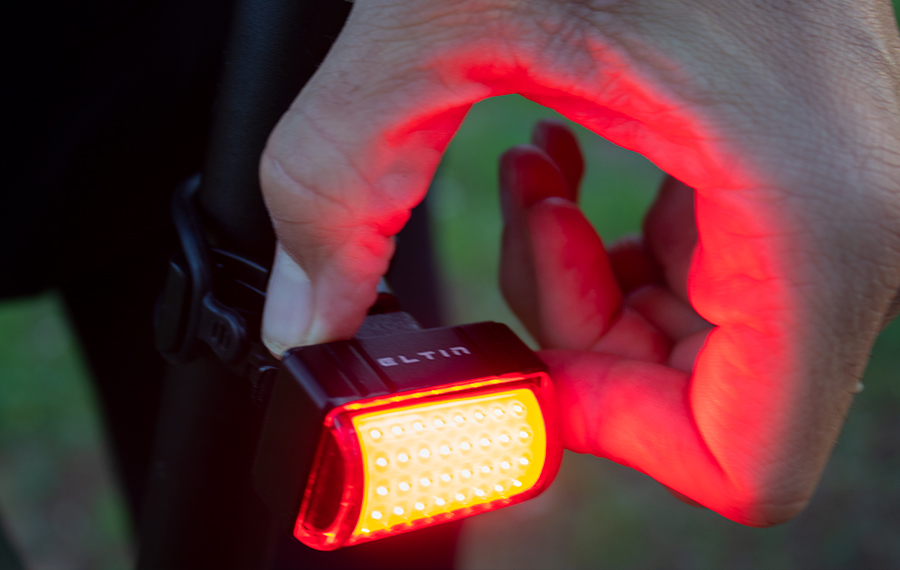
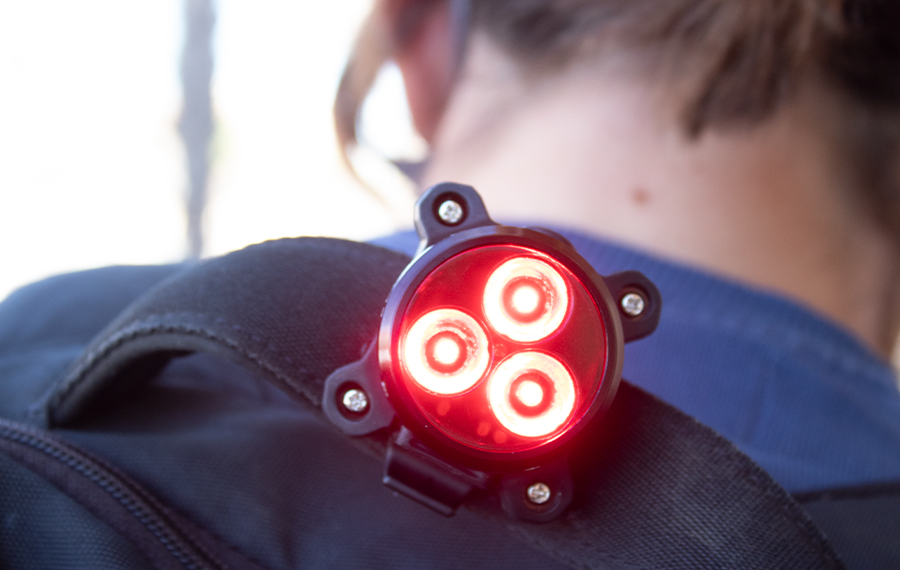
If there’s good natural light throughout your ride, a front light won’t always be necessary. However, when it comes to the rear light, our recommendation is to always fit a red light on your seatpost. It doesn’t get in the way, it weighs next to nothing, and it’s really useful whenever visibility drops (early mornings, late evenings, shaded roads, heavy traffic…). It makes drivers spot you much earlier and take the measures needed to ensure your safety.

▶︎ Bike lights for mountain biking

One of the advantages of mountain biking is riding on trails and paths where there are usually no cars or other vehicles. That’s why night rides are more common in MTB, provided you have powerful lights.

The recommendation for this type of cycling is to always use both front and rear lights. In the mountains there’s no artificial lighting, and many paths – especially narrow trails – are shaded by valleys or surrounded by tall trees, which block natural light. This can happen at any time of day, so carrying a front light lets you switch it on whenever needed, giving you a clear view of the terrain and warning you about obstacles such as rocks or steep descents.

▶︎ Bike lights for city commuting

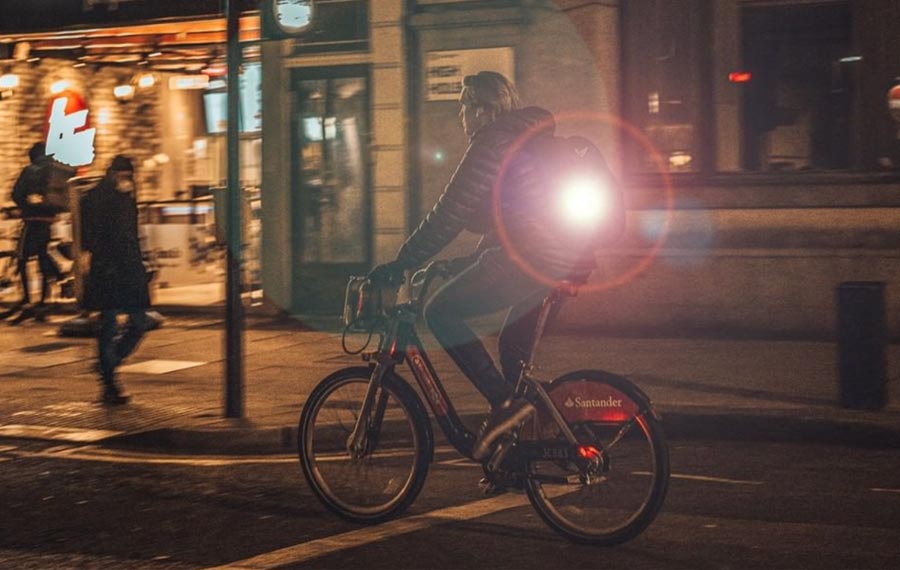
If you use your bike to get around the city, you probably ride both during the day and at night. That means a front and a rear light are absolutely essential.

Even though you might think that streetlights are enough, they’re not. You still need bike lights to make yourself more visible in traffic. Otherwise, you could face a fine, as we’ve already mentioned.

And because urban riding means sharing the road with cars, pedestrians and other cyclists, visibility is more important than ever. That’s why we strongly recommend adding amber reflectors on your wheel spokes and pedals for city riding.

piloto trasero bicicleta ciudad

Is it compulsory to wear a reflective garment when cycling?

The law states that, whenever the use of lights is compulsory, cyclists riding on interurban roads must also wear a reflective garment visible from at least 150 metres away. This requirement is taken seriously: fines for not wearing such a garment can be as high as €200.

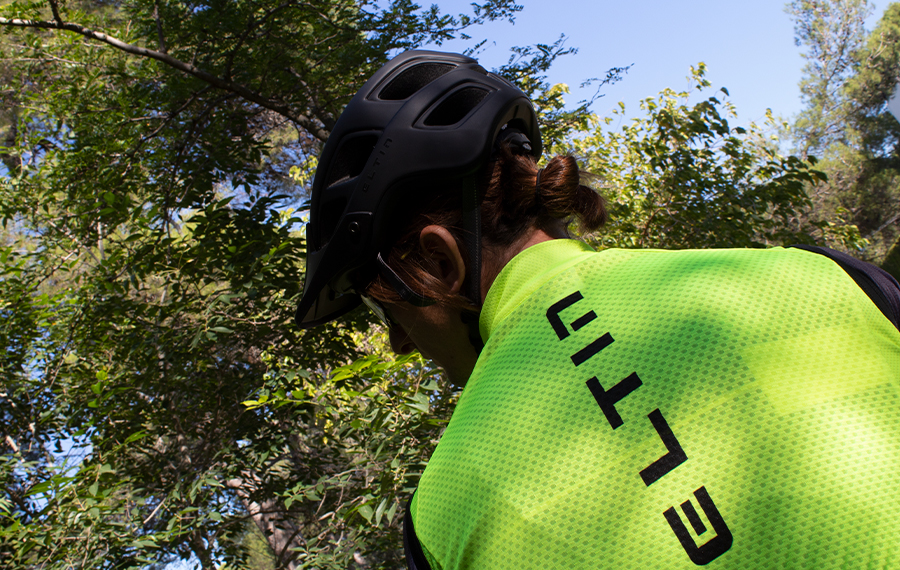
That said, even if it’s only mandatory in these circumstances, our recommendation is to always choose cycling kit in bright colours or with reflective details, so that you can be easily spotted from a distance.

chaleco ciclismo

Can you use flashing lights on your bike?

This has often been a grey area for cyclists, as in the past there were cases of riders fined for using flashing lights

The answer is yes, but with conditions. Under the Road Vehicles Lighting Regulations 1989, bicycles may be fitted with flashing front or rear lights as long as they flash at a rate between 60 and 240 times per minute and have a minimum luminous intensity of 4 candela. If the light is capable of producing a steady beam, it must conform to British Standard BS 6102-3.

This means that flashing lights are perfectly legal on UK roads, provided they meet these requirements. In fact, many cyclists use a flashing rear light to improve visibility in traffic, often combined with a steady front light to better illuminate the road ahead.

What should you look for when choosing bike lights?

There are several features to consider when choosing lights for your bike.

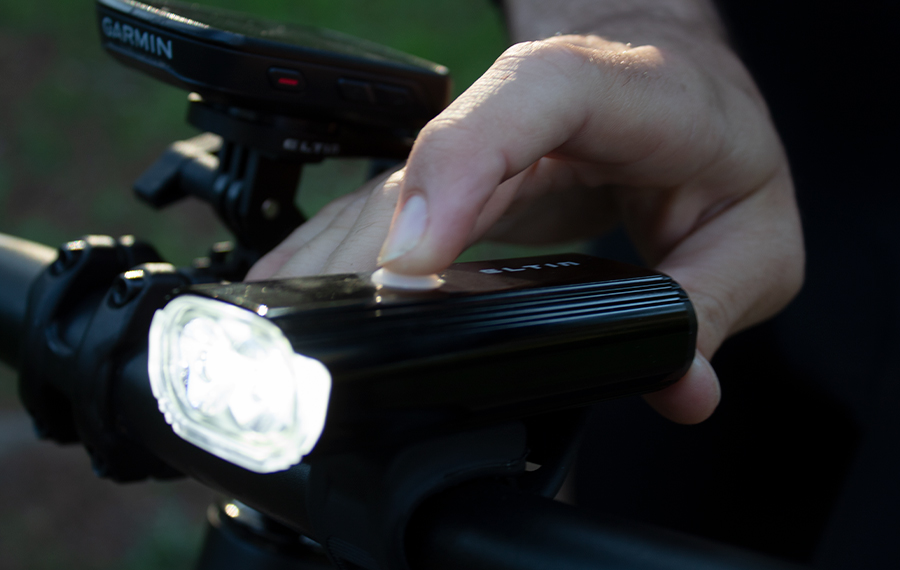
First, the light intensity and the available modes. Intensity is usually measured in lumens. Although there isn’t a strict rule for how many lumens you need, here’s a general guide depending on usage: for urban riding, 50–200 lumens is often enough; for unlit roads and trails, 400–600 lumens is advisable; the most powerful lights, above 600 lumens, provide a very wide field of vision and are ideal in conditions of very low or no visibility. Also check the runtime of the light at maximum output. Generally, the front light should be more powerful than the rear one, since it’s about seeing as well as being seen.

You should also check the battery life, autonomy, and charging system. For long rides, make sure your light will last the whole journey without dimming. A light with a low-battery warning and USB charging will make life much easier.

Although most modern lights are already designed with this in mind, always ensure they are resistant to water and dust. Durability is essential.

Finally, find the right balance between powerful visibility and comfort. Pay attention to the mounting system on the handlebar and the weight of the light so it’s easy to carry and doesn’t get in the way.

Increase your visibility, make yourself seen and reduce every possible risk. Your safety is at stake.

#KeepOnCycling

Product added to wishlist