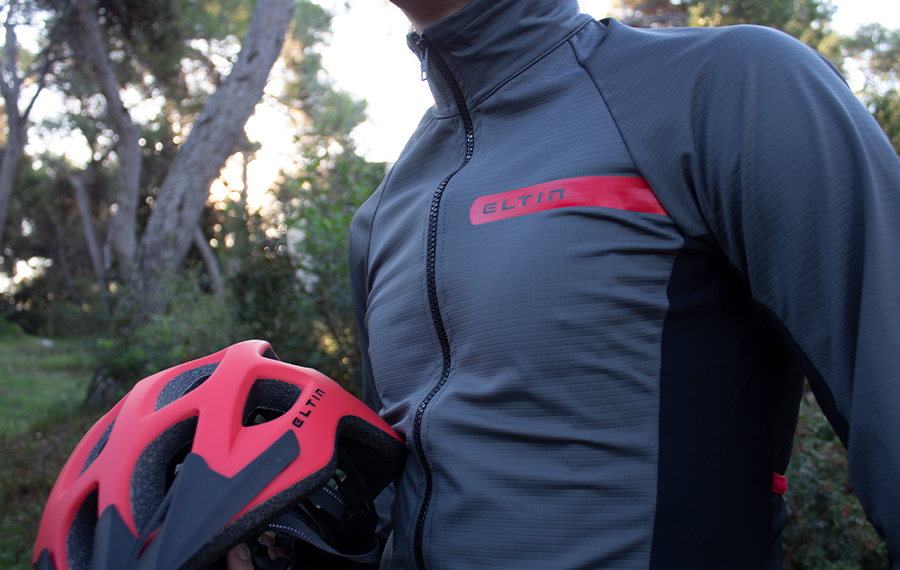
If you enjoy riding all year round, one of your biggest concerns is probably figuring out how to dress for cycling in winter. Below, we’ll explain how to dress so you can keep enjoying your rides withou
As a cyclist, you’ve probably found yourself in one of these situations most likely both: you go out for a ride in winter and start feeling cold, your hands and feet freeze, and you just can’t warm up, all while regretting not dressing warmly enough; or, on the other hand, you head out determined not to be cold and overdress, ending up feeling too hot and wishing you’d left a layer at home. Beyond the immediate discomfort, these situations can also lead to colds or infections that stick around for days.
These are the two extremes of the same problem: a poor choice of winter cycling apparel. In this article, we’ll walk you through the different options available and the key tips to avoid getting cold on your bike rides.
What should you consider before choosing your winter cycling apparel?
To stay warm while cycling, every piece of clothing you wear needs to serve two key purposes. First, it must protect you from the cold and external moisture, preventing it from penetrating your body. Second, it should wick away the moisture caused by sweat, allowing it to evaporate and preventing you from getting chilled due to wet skin.
To achieve this, it's essential that all garments are specifically designed for cycling, as they’re made to meet both of these needs. Other garments such as those designed for hiking or mountaineering may be lightweight and warm, but they aren’t built to manage the sweat generated during long periods of pedaling. Additionally, the materials used for each sport are different, and cycling-specific clothing offers the ideal thickness and seam design for greater comfort while riding.
Weather conditions in your area and the forecast for the time you’ll be out are also important to consider. Dressing for a ride in the Irati Forest in the Basque Country is not the same as dressing for a coastal route along the Mediterranean. Humidity levels vary from place to place, as do the chances of sudden rain. If you go out early in the morning, temperatures will likely rise. If you ride in the afternoon, they’ll probably drop. As any experienced cyclist knows, temperatures rise with elevation gain and drop quickly on descents due to wind chill. That’s why knowing the conditions you'll face along your route is crucial to dressing properly for every part of it.
Finally, know yourself. Everyone has a different level of tolerance to cold and moisture. Understanding how your body reacts in different situations and learning from past mistakes is key to making better clothing choices each time and figuring out what works best for you.
Now that we’ve gone over these important considerations, let’s take a look at the various clothing options available to help you stay warm on the bike. We’ll go from top to bottom head to toe because it’s essential to protect every part of your body.

How to protect your neck and head from the cold while cycling?
To protect these areas, there are several options you can choose from depending on the temperature and your tolerance to the cold.
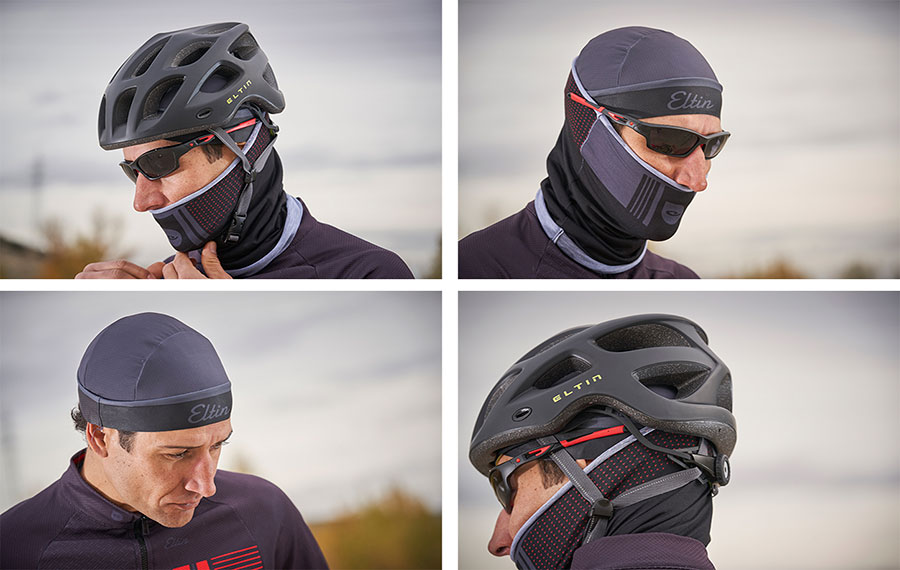
Cycling bandana or neck warmer
The neck is an area where cold tends to penetrate easily, potentially causing colds and throat discomfort. To avoid this, many cyclists use a neck warmer during their rides. You can find thinner versions, mainly designed to protect against wind, and thicker ones that also help retain warmth in the area. Depending on your tolerance to the cold and how you feel wearing one as some people find it uncomfortable around the neck when they start sweating you’ll choose one type or the other. You can even wear both at once when it gets really cold.
Cycling skullcap or under-helmet hat
Its purpose is to protect the top of the head from cold and rain, and it’s worn under the helmet (skullcap). Many cyclists use this accessory year-round to prevent sweat from dripping down their face. The most important thing is that it’s breathable, to avoid a sauna effect on the scalp and excessive sweating.
Ear warmers or headbands
Although it's easy to forget to cover them, ears get cold quickly and can become a “gateway” for ear or throat infections. To prevent this, there are winter hats that include extended coverage for the ears. You can also use a headband that wraps around your forehead and the back of your head, covering your ears along the way.
Balaclava or face warmer
Balaclavas cover the neck, head, and ears. The face warmer, as its name suggests, includes protection for the face. It covers the nose and mouth while allowing easy breathing, preventing cold air from entering the lungs. Both accessories are used in very cold conditions as they provide maximum protection, but can be uncomfortable in milder temperatures.
For all the above options, it's important to remember that they are meant to be used alongside the mandatory helmet. The helmet is the main safety element, so any accessory you choose must be compatible and fit well with it. The most important thing is that the helmet can perform its function of protecting the skull without gaps or excessive movement.
How to get the right combination of cycling clothing in winter?
One of the biggest dilemmas you’ve probably faced as a cyclist is how to dress your upper body from the waist up in winter. There are countless options and combinations, and no matter which one you choose, it almost always feels like the wrong decision.
As we’ve mentioned, every area has different weather conditions, and every cyclist has a different tolerance to cold, so there’s no single perfect combination for winter cycling. Instead, there are many possible setups, as you’ll soon see. However, there is one recommendation that can be useful in most cases: use three layers.
What is the three-layer theory in cycling?
The “three-layer theory” is the idea of combining garments in a way that some insulate against the cold from the outside while others are breathable and allow sweat to evaporate from the body.
The first layer is responsible for wicking away moisture caused by sweat. To achieve this, use a thermal base layer that fits snugly against the skin and wicks away sweat. It can be long- or short-sleeved depending on the conditions or what feels more comfortable based on the outer layers.
The second layer is responsible for retaining body heat. You can use a winter jersey or, if it’s not too cold, a summer jersey.
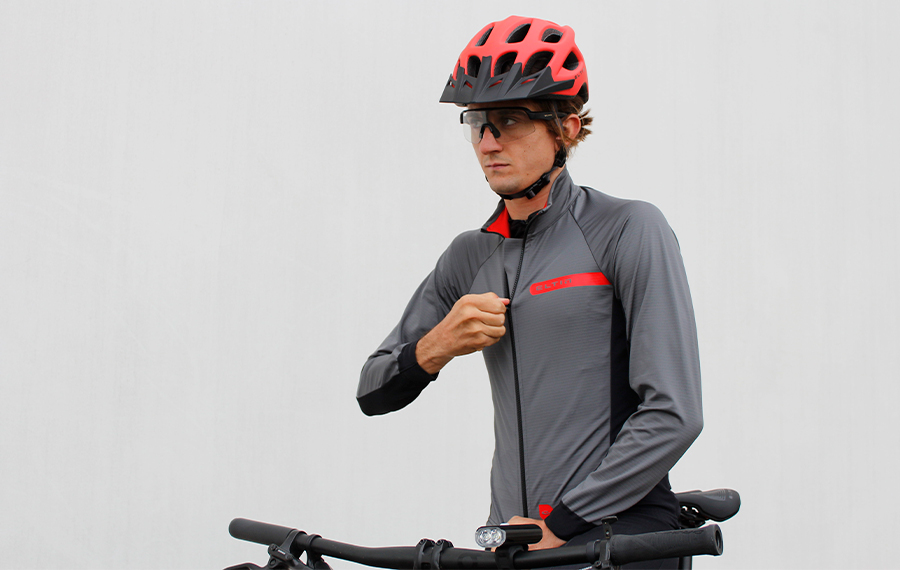
The third layer, finally, is in charge of protecting against external cold, moisture, and wind. Depending on the weather, you’ll use a jacket, vest, windbreaker, or raincoat.
Now it’s time to “peel back” those layers and present the different garments you can use:
Cycling thermal base layer
This is a must-have garment in your winter wardrobe. It retains body heat while wicking away sweat. It should fit snugly, acting like a second skin. If it’s too tight, you’ll feel compressed and uncomfortable, and if it’s too loose and forms bunches, it won’t serve its purpose.
The ideal material is synthetic fiber, which evaporates sweat and reduces the risk of getting chilled from moisture. Wearing a cotton undershirt, even if it feels warm, is not suitable as it retains moisture and doesn’t breathe, meaning you’ll soon be soaked and the cold will seep in more easily.
There are different types of thermal base layers depending on their thickness and sleeve length: long, short, or sleeveless. It’s best to have at least one thicker, long-sleeved version and another thinner, short-sleeved or sleeveless one. This way, you can choose based on weather conditions or comfort, depending on the outer layer. For example, if you’re already wearing a long-sleeved winter jersey, a short-sleeved or sleeveless base layer will suffice. On the other hand, if you’re wearing a summer jersey, a long-sleeved base layer will help protect your arms.
Winter cycling jersey
Do you really need to buy a winter cycling jersey, or is a thermal base layer and/or arm warmers combined with a summer jersey enough?
You’ve probably asked yourself this question at some point. The answer depends on two factors: the conditions in the area where you’re riding and your personal tolerance to cold.
As long as it’s a jersey specifically designed for cycling and not something like a hiking fleece, for example, there’s no issue you can choose whichever option suits you best.
Some cyclists always wear summer jerseys and protect their arms with arm warmers, a long-sleeve thermal layer, or both. This is a valid option for mild winters. However, it’s recommended to have at least one winter jersey, which is thicker and retains heat more effectively. Summer jerseys likely make up the majority of your cycling wardrobe, so it’s worth adding a winter one to use when the temperatures drop.
Jacket, raincoat, vest… or several at once?
This third layer always raises questions, as it can be the deciding factor in whether you end up cold and wishing you’d brought more, or feeling like an onion with too many layers and overheating.
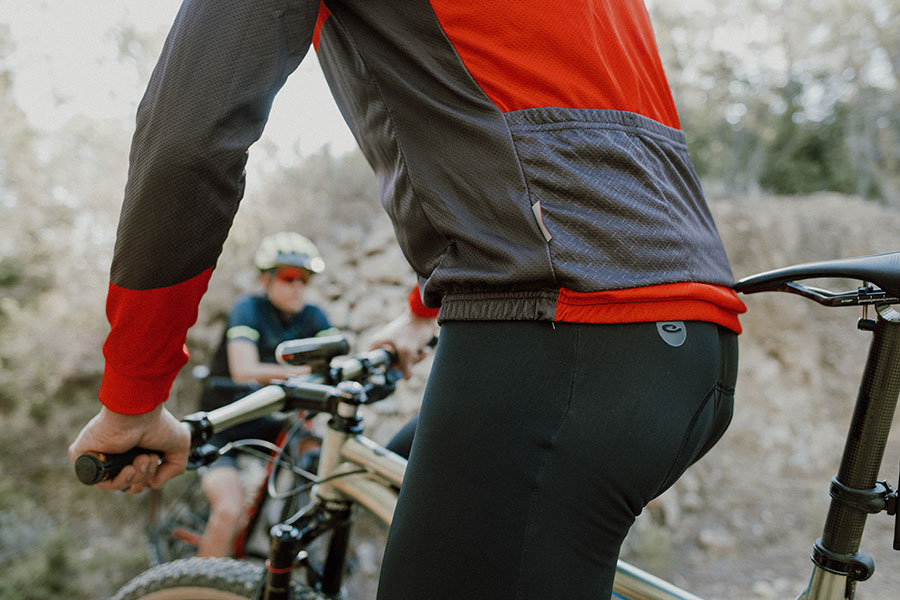
However, each garment has a specific function you should be aware of. The jacket is essential when temperatures are very low. The vest is useful in mild or cool conditions when the sun is out. A raincoat or windbreaker is a must if it’s raining or there’s a chance of rain, to avoid ending up soaked.
One of the great advances in cycling-specific clothing is its portability and compatibility with other layers. Vests, raincoats, and windbreakers are designed to be easily folded and stored in your jersey pocket, allowing you to take them with you and put them on as needed throughout the ride.
It’s a good idea to have at least one of each type of garment so you can adapt based on the temperature and conditions at any given time. This third layer is responsible for insulating against the cold and protecting you from wind and moisture, so choosing the right one is key to keeping your upper body properly covered.
How to keep your legs warm while cycling?
Continuing downward, we reach the legs the ones doing the pedaling and your main tools as a cyclist.
It’s fair to say that riding with your legs covered isn’t always pleasant. While pedaling, they warm up quickly and start sweating easily. That’s why many cyclists avoid wearing long legwear until deep into the winter season.
In fact, if you live in an area with mild winters, a good pair of leg warmers combined with summer bib shorts may be enough. On the other hand, if temperatures regularly drop below 5°C (41°F), it’s advisable to invest in a pair of winter bib tights.
There are different garments and options for keeping your legs warm while cycling:
Leg warmers
Just like arm warmers for the arms, leg warmers cover the part of the leg that the bib shorts don’t reach. They’re a great option for mild temperatures and transitional seasons like autumn and spring. It’s important to remember that they should be cycling-specific leg warmers that allow for breathability and don’t trap sweat, which can cause discomfort.
Tights
If we compared leg warmers to arm warmers, then tights would be like the thermal base layer. While they’re a very practical option for mild temperatures, keep in mind that wearing tights underneath your bib shorts can cause chafing, so it’s important to choose ones that fit you properly. Additionally, their main function is to act as a second skin by wicking away sweat, so they may sometimes be insufficient to protect against cold and wind.
As mentioned earlier, in cold temperatures it’s essential to wear a winter-specific cycling shorts . There are different models depending on thickness and fabric. For extremely cold areas, Gore-Tex long bib tights are now available and offer excellent protection. You should make sure it’s a stretchy bib tight that fits your legs well and doesn’t cause discomfort in an area that needs to be ready to pedal hard.
¿How to prevent your hands and feet from freezing while cycling?
If there are two parts of the body that suffer the most from the cold while cycling, they are definitely the hands and feet. You’ve surely experienced the unpleasant feeling of cold numbing your hands and feet, making it hard to move your fingers and maybe even said, “I can’t feel my hands…” or “my toes are in so much pain…”
Fortunately, it is possible to avoid this.
When it comes to your feet, you can combat the cold with a good pair of winter socks. These are thicker, cold-weather-specific socks that keep your feet at an optimal temperature while wicking away sweat and keeping them dry.
As for your shoes, you can use overshoes. These are like protective socks that go over your cycling shoes, shielding your feet from cold and moisture. They’re highly recommended for road cycling, as in mountain biking they tend to tear or get damaged from branches, rocks, mud, puddles… and eventually lose their effectiveness. Therefore, for mountain biking, it’s best to use specific winter cycling shoes, which offer better protection against impacts and moisture and are usually higher to prevent water and mud from getting in.
You should also consider the sock-shoe combination. If you’re using thicker socks in winter, your summer shoes might feel too tight, so it’s worth investing in a pair of winter shoes that fit properly with those socks.
For your hands, gloves are your best ally against the cold. There are different models depending on thickness. Depending on the weather, you’ll use thinner or thicker gloves but always make sure they are cycling-specific and designed to protect while also being breathable, so your hands stay dry. Hands are crucial for cyclists, as they’re responsible for controlling the handlebars, shifting gears, and braking. Therefore, choosing cycling-specific gloves that allow proper contact with the brake and shift levers and provide good grip on the handlebars is essential for safe riding.
It’s also worth!.

Other tips to fight the cold while cycling
First, something we've emphasized throughout: all the garments you wear should be cycling-specific, as they are designed to protect against the cold and wick away sweat.
Second, plan your routes carefully. Estimate how many hours you’ll be outside, check the forecast for that time period, and consider temperature changes throughout the day as well as those caused by your effort. Dress warmly and use layers that are easy to remove and store in your jersey pockets so you can adjust as needed. Beyond the weather conditions, it’s important to know yourself understand your tolerance to cold, use your past experience, and avoid repeating previous mistakes.
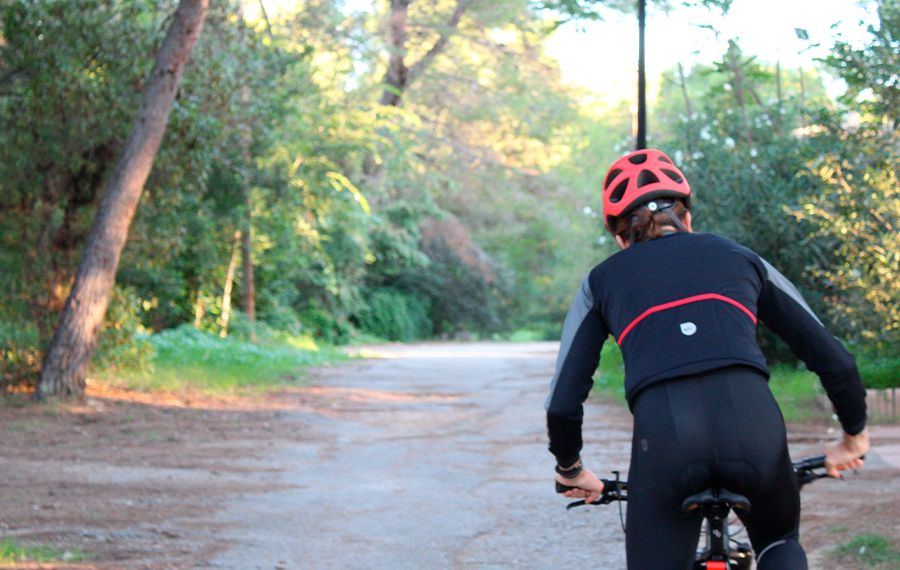
Third and finally, you’ll notice that winter clothing is often darker in color to help attract heat. However, many of these garments also feature bright or fluorescent colors to make you more visible. Try to wear clothing with these types of colors to ensure you're seen. In addition, sunlight is less intense in winter than in summer, and wearing garments with bright colors increases your safety.
We hope our tips help you avoid getting cold on the bike so you can enjoy your rides no matter the weather conditions. Fortunately, there are more and more cycling garments available that offer better protection from cold and moisture, while still being lightweight and easy to carry.
If you’d like to learn how to dress with our gear, don’t miss this article where we present all of Eltin’s winter options.
Remember, whatever the season, don’t let anything stop you! #KeepOnCycling