

Shopping Cart
There are no more items in your cart Gravel riding is here to stay. In this article, we talk about it and introduce you to events and races in this discipline that leave no one indifferent. So, will you join the gravel movement?
#KeepOnCycling is Eltin’s identity. Keep enjoying cycling, keep pushing yourself, keep living new experiences, keep discovering new places... all while never stopping pedalling. That’s why we celebrate all types of cycling, whatever the purpose or environment, whatever motivates you to keep riding, as long as it means bikes in motion and riders enjoying them.
On this blog we’ve talked a lot about road cycling, mountain biking and urban cycling. And although many of the topics we cover apply to all disciplines, it’s true that we’ve never focused specifically on the cycling discipline that has seen the most growth in recent years: gravel. You’ve probably heard a lot about it within the cycling world, and if you ride regularly, you’ve likely noticed more and more of these unique bikes. Let’s dive in and discover more about it!

“Gravel”. The name itself gives it away. It refers to the type of terrain this discipline is built for. A bike designed to ride on gravel surfaces, small stones, forest tracks and flowing, non-technical trails, while still being comfortable on tarmac.
Gravel cycling doesn’t aim to reinvent the wheel or create entirely new uses for the bike. Instead, it represents a natural evolution of cycling, expanding the ways we can enjoy riding. It is the result of technological advances, innovation in materials and components, and the growing demand from cyclists for a more adventurous and relaxed riding style.
We say it’s nothing new because, many years ago, some mountain bikes already featured narrower tyres and drop handlebars to allow faster riding on less technical terrain and a more aerodynamic position. In fact, at first glance, a gravel bike may look very similar to a cyclocross (CX) bike. There are differences: gravel bikes usually allow wider tyres, while cyclocross bikes are designed for racing on varied and technical circuits. In contrast, gravel bikes are built for long days in the saddle, prioritising comfort and efficiency on adventure routes. Both share the idea of versatility, combining the advantages of road and mountain bikes on mixed terrain.
Although the concept is not new, the first true gravel bikes emerged around 2015 in the United States. After an initial development phase, brands quickly embraced the movement, bringing gravel bikes and products to market. Not only bike manufacturers, but also brands of components, clothing and accessories have developed dedicated gravel ranges. Today, it is a global discipline, with particularly strong growth in Europe. Gravel is trending, but it’s not just a passing trend — it’s here to stay.

With the ergonomics of a road bike, but adapted to accommodate wider, treaded tyres similar to those found on mountain bikes, gravel bikes are a hybrid between road and MTB. They are designed to perform well on both types of terrain, as long as the difficulty doesn’t reach highly technical levels such as demanding singletrack trails.
The design focuses on providing the rider with comfort and stability, featuring a more upright and relaxed riding position. Gravel bikes typically have a taller head tube than cyclocross bikes to promote this less aggressive posture, while longer chainstays and top tubes improve stability. Additionally, the frame allows for generous tyre clearance, making it compatible with a wide range of tyre widths.
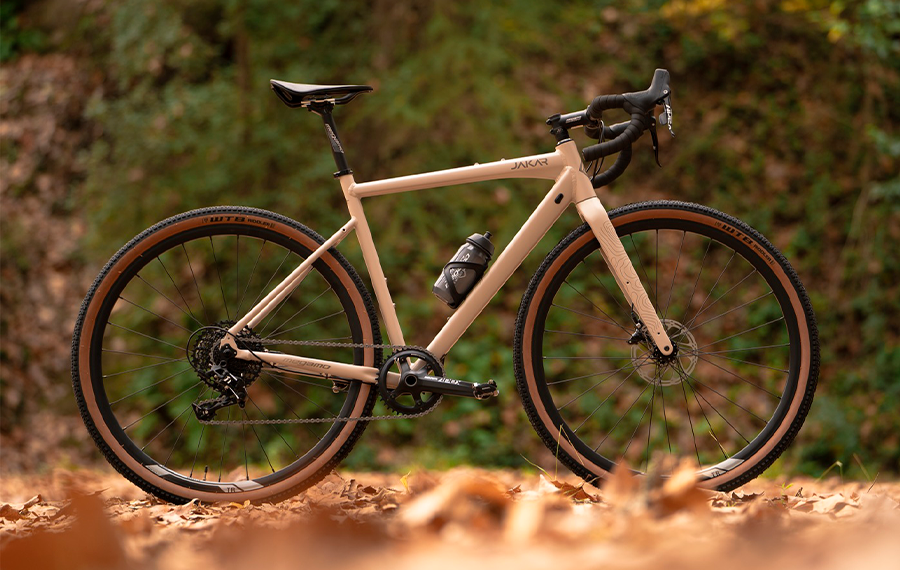
As riding often takes place on muddy terrain and frequently involves water, sand and other obstacles, it’s essential that braking is quick and reliable. For this reason, gravel bikes are equipped with disc brakes. The braking and shifting systems are similar to those found on road bikes, integrated into the levers for greater speed and convenience. In addition, to walk comfortably when off the bike, it is ideal to use mountain bike pedals compatible with SPD with the appropriate shoes, or wider hybrid pedals depending on how you use the bike.
Finally, one of the most common uses for gravel bikes is bikepacking routes and multi-day adventures. As we’ll see, many events in this discipline are based on self-sufficiency, requiring riders to carry all their gear on the bike. To support this, gravel bikes are designed with multiple mounting points on the frame and fork, allowing the installation of bags and racks for long-distance adventures.
One of the clearest signs of gravel’s growth in Spain, along with the increasing number of riders using this type of bike, is the number of events that fill a calendar that is becoming more and more exciting.
While many events are new and launching their first editions this year, many others have already established themselves in riders’ calendars, proving their strong appeal and growing popularity.
As you’ll see below, these are very different types of events: multi-day or single-day, competitive or non-competitive, self-supported or with feed stations. In other words, events of all kinds — from races with rankings and competitive elements to adventures where the route is set but each rider manages their own journey in a self-supported format. What they all share is the adventurous and off-road spirit (gravel tracks and forest paths) that defines gravel, along with the appreciation of the regions they pass through and their culture, history, landscapes and gastronomy.
Shall we discover some of them?
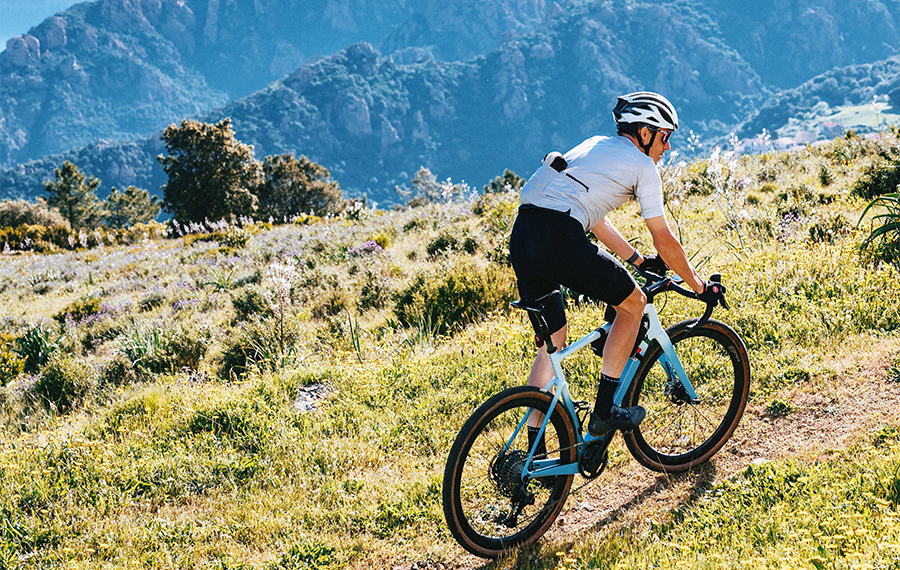
The first event we present couldn’t take place anywhere other than the province of Girona. It is, without a doubt, one of the regions where gravel has grown the most in Spain, with secondary roads and tracks offering endless possibilities. You could say it is the cradle of gravel in our country, and events such as The Traka have played a key role in the development of this type of race.
After several highly successful editions, The Traka 2026 is shaping up to be a must-attend event. From 30 April to 3 May, Girona becomes the epicentre of gravel, with a full programme of activities and services around the different races. The event offers four routes to suit different levels, ensuring that difficulty is not a barrier to enjoying the experience.
On 30 April, the most demanding challenge takes place, with 560 km and 10,000 m of elevation gain, designed for ultra-distance riders. On 1 May, the 335 km (+4,000 m) route is held, followed on 2 May by the 200 km (+2,250 m) course, one of the most popular options. The event closes on 3 May with the 100 km and 1,350 m of elevation gain route, ideal for those looking for a more accessible experience.
More than just a gravel race, The Traka is a meeting point where the true spirit of this discipline can be felt. For several days, Girona fills with cyclists, adventure and off-road spirit, becoming a European reference for gravel.
La Indomable Gravel brings the essence of one of the most demanding sportive events on the national calendar into the world of gravel, right in the heart of the Alpujarra of Almería. With both start and finish in Berja (Almería), the route takes place in a unique mountain environment, combining spectacular landscapes, traditional villages, and roads and tracks that truly test the rider’s endurance.
The event offers two main routes: a Gran Fondo of 178 km with 3,700 m of elevation gain, and a Medio Fondo of 101 km with 2,279 m of elevation gain. Both are characterised by long climbs, demanding terrain and a clearly mountainous profile. A race designed for experienced riders looking for a serious physical challenge in one of the toughest and most authentic settings in southern Spain.
Gravel Birds Ultracycling is not a race, but a bikepacking and adventure cycling experience that crosses some of the most remote territories in Portugal. In 2026, it will feature three routes starting and finishing in Castro Verde:
L’Abetarda (350 km | 5,000 m+ | 65% off-road): the most accessible option, ideal for beginners, passing through the Serra do Caldeirão.
Gravel Birds Classic 750 (750 km | 11,000 m+ | 75% off-road): a historic route and a benchmark for bikepacking in Portugal, with great natural and cultural richness.
Gravel Birds XL 1000 (1,000 km | 15,000 m+ | 70% off-road): the newest route, passing through Beja, Évora and the Alqueva lake, the largest in Western Europe.
This event is a great opportunity to explore the fascinating landscapes of the Alentejo, ride rural tracks and enjoy a truly authentic cycling adventure. Registrations open in advance.
Don’t miss out — secure your place before entries close!
Taking place on 16 May, with start and finish in Santa Susanna (Barcelona), this is one of the most attractive events in the Spanish gravel calendar. Designed for gravel bikes, the event offers a complete experience between the sea and the landscapes of Montnegre and Montseny.
The main race, the M&M 140K, starts at 08:00 and features a route of 140 km with 2,800 m+, with a time limit until 17:00. For those looking for a more accessible option, the M&M 70K starts at 09:00 and offers 70 km with 1,000 m+, finishing at 13:00.
This is an event that stands out for its variety of terrain and accumulated elevation, where pacing and effort management are key. In addition, the natural surroundings and the transition from sea to mountains give each kilometre its own unique character.
The Ranxo Gravel has established itself as one of the must-attend events in the Spanish gravel calendar. With start and finish in Ponts (Lleida), the race takes place on 7 June 2026 and offers a route that crosses open landscapes, agricultural tracks and fast gravel roads typical of the area.
The event features three distances suited to different levels: 67 km, 100 km and 160 km, with a progressive elevation gain that increases with distance, allowing both beginners and more experienced riders to take on a challenge. The routes stand out for being fast and flowing, with long sections where maintaining a steady pace is key, combined with some more technical sectors that add variety.
Ranxo Gravel is designed to enjoy gravel in its purest form: fast tracks, simple navigation and an ideal setting for riding for hours. A perfect mid-season goal, whether you’re aiming for performance or simply looking to enjoy the experience on the bike.
The Basajaun, held on 26 July, is a self-supported ultra-distance event starting in Vitoria-Gasteiz and offering a highly demanding route through some of the most contrasting landscapes in northern Spain. From the forests of Urbasa and Irati to the arid terrain of the Bardenas Reales, passing through the Sierra de la Demanda and the surroundings of Pico San Lorenzo, the route combines wild nature and varied terrain in a format of around 70% off-road.
In previous editions, the route has exceeded 850–900 km and 15,000 m of elevation gain, giving a clear idea of the level of difficulty involved. An adventure where navigation, effort management and self-sufficiency make all the difference in a true bikepacking challenge.
If your legs are asking for a challenge of this magnitude in a unique setting, Basajaun is exactly what you’re looking for!
Southern Spain is a land of unique contrasts, vast landscapes and enormous cultural richness, and Granada is one of its greatest examples. Surrounded by the imposing Sierra Nevada, the forests of the Sierra de Huétor and very close to the Mediterranean coast, it offers a privileged natural setting that, together with its history and iconic landmarks such as the Alhambra, makes it an irresistible destination.
It is in this setting that Badlands takes place, one of the most extreme gravel and ultra-distance challenges in Europe. Starting in Granada and finishing in Almería, it offers a route of around 800 km and more than 16,000 m of elevation gain, crossing some of the wildest landscapes in southern Spain. The route combines high mountains with desert areas such as Gorafe and Tabernas, as well as coastal sections, in a format of total self-sufficiency where each rider manages their own strategy. Among its most iconic points is the ascent to Pico Veleta (3,396 m), making it an adventure as demanding as it is unforgettable.
This year, the challenge will take place on 30 August.
Follow it closely and get ready to experience this incredible adventure for yourself one day!
Visit the website.
The Roc d’Azur celebrates its 42nd edition, establishing itself as one of the largest cycling festivals in Europe, with several gravel events included in its programme. Held in Fréjus, on the French Riviera, the event offers different routes to suit all levels: from a more explosive format such as the Canyon Gravel Roc Sprint (33 km / 810 m+), to more demanding options like the Rando Gravel Estérel (70 km / 1,220 m+) or the Alltricks Rando Gravel 140K (143 km / 2,230 m+), as well as the Continental Gravel Roc (77 km / 1,630 m+). With varied terrain combining fast tracks and technical sections in the Estérel massif, it is a perfect event both for those seeking performance and for those looking to enjoy gravel in a spectacular setting by the Mediterranean.
These gravel routes are designed to offer a complete cycling experience, where the main goal is to enjoy the natural surroundings without the pressure of competition. An ideal opportunity to discover new paths, share kilometres with other riders and experience gravel in a friendly, accessible and truly enjoyable environment.
Although it is not a purely cycling event, Sgrail 100 has earned its place on the calendar thanks to its innovative format, combining swimming, gravel cycling and trail running in a single race. Starting in Cadaqués, on the Costa Brava, it offers a route that connects sea, mountains and gravel tracks in a spectacular setting.
The race begins with 1,500 m of swimming in the Mediterranean, followed by an 88 km gravel cycling segment through the tracks and trails of the Cap de Creus Natural Park and the Plana de l’Empordà, featuring demanding elevation gain and varied terrain that combines fast sections with more technical areas. The challenge is completed with a 10.5 km trail run through the Massís de les Gavarres, testing riders’ endurance in the final stretch to Girona.
A different kind of event that combines disciplines, strategy and effort management in an increasingly popular format, ideal for those seeking a complete challenge where gravel plays a key role in a unique sporting experience.
Three sports in one, with gravel at the heart of it… what could possibly go wrong?
The Wineland Gravel Experience is one of the most attractive events to close the season, combining cycling, landscapes and wine culture in the Tierra Bobal region. Starting in Requena (Valencia), the event offers routes along tracks and paths through vineyards, in a perfect setting to enjoy gravel in its purest form.
The gravel event takes place in a single day and offers three distances: 50 km (600 m+), 75 km (900 m+) and 120 km (1,500 m+), adapting to different levels and goals. With a mainly fast and flowing profile, it allows riders to maintain a steady pace while still including some more demanding sections that add variety to the route.
With a non-competitive approach and a carefully curated atmosphere, it is an ideal event for those looking to enjoy gravel without pressure, share kilometres and discover new territories on the bike at the end of the season.
This has only been a small selection of gravel events and races that you should mark in red on your cycling calendar, whether for this season or future editions, and keep a close eye on if you enjoy adventure cycling. However, there are many more options and different bikepacking adventures that offer riders a unique and unforgettable experience. If you know of any, have completed one, or have a goal in mind, we would love to hear from you and continue expanding this article with more gravel events.
For example, we recommend that at some point in your cycling life you try a bike touring experience and explore new places by bike. For this, a gravel bike will be your best ally. But where should you start? Don’t worry, because in our article “5 must-do cycling routes to get started in bike touring” we share five great options that are sure to inspire you.
Seeing how cycling continues to grow, expand its boundaries and introduce new disciplines that bring more people into this amazing sport is something we truly love. That’s why we celebrate the rise of gravel and the increasing involvement of organisers and sponsors in creating events that bring colour to the cycling calendar while showcasing the culture, landscapes and gastronomy of the regions they pass through. Long live gravel!
#KeepOnCycling
Save products on your wishlist to buy them later or share with your friends.